Madipo Pushes Green Madrasah Agenda after Ecotheology Forum
SLEMAN — Madrasah Aliyah (MA) Diponegoro, known locally as Madipo, is positioning environmental stewardship as more than an administrative goal. Following a regional seminar on ecotheology and the Adiwiyata green-school movement, the madrasah said it would integrate ecological values into campus governance while strengthening a sustainable madrasah economy.
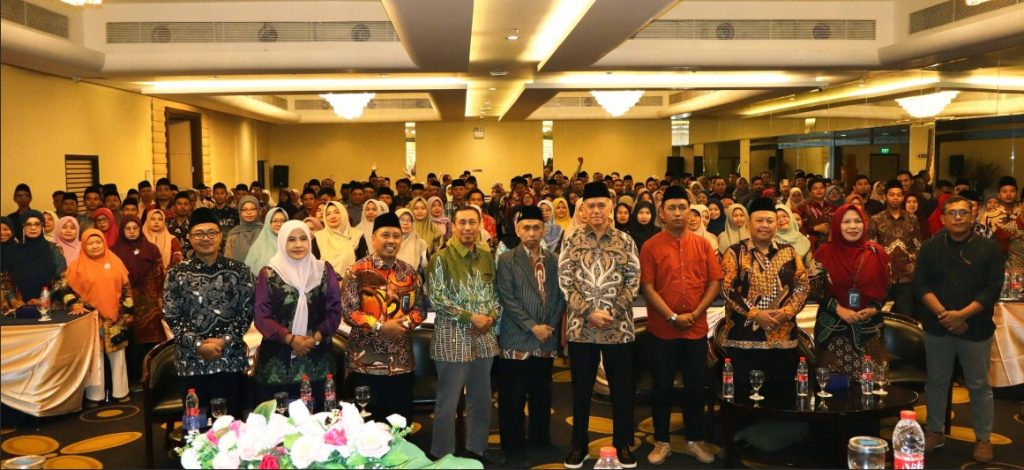
The seminar, “Fostering Ecological Awareness through the Integration of Ecotheology and the Adiwiyata Movement,” was held on Saturday at the New Saphir Hotel in Yogyakarta. It was jointly organized by the Tarbiyah Faculty of Raden Mas Said State Islamic University (UIN) Surakarta, the Religious Affairs Ministry’s Directorate General of Islamic Education, the House of Representatives’ Commission VIII and the Yogyakarta Religious Affairs Regional Office.
Madipo was represented by Fauzan Satyanegara and head of administration Cinthiya Zakiah Arifah. They joined principals and infrastructure coordinators from 100 Islamic schools, or madrasah, across Sleman regency.
A strategic direction
Cinthiya said the forum aligned closely with Madipo’s strategic roadmap, which treats environmental management as a driver of institutional resilience rather than merely a compliance requirement.
“This program strongly supports Madipo’s ongoing initiatives, particularly in advancing our environmental governance toward achieving Adiwiyata status alongside developing a sustainable madrasah economy,” she said.
The school views the Adiwiyata framework as a platform to build a campus ecosystem that is environmentally conscious, character-driven and economically productive. Its approach combines spiritual ecological values with structured environmental management, from waste reduction and green infrastructure to curriculum-based environmental education.
Ecotheology in practice
During the keynote session, “Building an Adiwiyata Madrasah toward Ecotheology,” Dr. Muhammad Lutfi Hamid urged Islamic educational institutions to play a more active role in addressing the escalating ecological and climate crises.
He said environmental conservation was deeply rooted in Islamic teachings, citing Quranic injunctions against ecological degradation and prophetic traditions that frame tree-planting as an act of perpetual charity. The message reinforced the seminar’s central premise: caring for the environment is not only a policy agenda, but also an expression of faith.
Ecotheology has increasingly been presented as a moral and spiritual foundation for environmental action in Indonesian Islamic education, complementing the practical framework offered by the Adiwiyata program.
National momentum
The push for greener madrasah is supported by updated national regulations, including Environment Minister Regulation No. 5/2025 on the Adiwiyata Program and a 2025 memorandum of understanding between the Environment Ministry and the Religious Affairs Ministry.
Under the framework, schools are encouraged to cultivate environmental character through four behavioral stages: perception, internalization, concrete action and habituation. Institutions are also urged to establish dedicated Adiwiyata task forces, register through the Adiwiyata Information System (SIDIA) and embed eco-friendly practices in both classroom learning and campus infrastructure management.
For Madipo, the challenge now is to translate the seminar’s ideas into measurable action. The school aims to harmonize faith-based ecological values, Adiwiyata governance and economic self-reliance—turning environmental awareness into a lasting institutional culture.Bj
